
Explore our departments
Learn more about our departments and the services they offer.
Hospital site map
A map of all the major departments is available to download and print before your visit.
Sir Robert Ogden Macmillan Centre

This state-of-the-art clinical unit is the central hub for Harrogate and District Cancer Services. It provides cancer treatments including chemotherapy, alongside supportive care and access to health and wellbeing services.
Chemotherapy uses drugs to treat many different chemotherapy uses anti-cancer (cytotoxic) drugs to destroy cancer cells. Cytotoxic means toxic to cells. Cytotoxic chemotherapy drugs disrupt the way cancer cells grow and divide.
Most chemotherapy drugs are carried in the blood. This means they can reach cancer cells anywhere in the body.
Chemotherapy drugs also affect some of the healthy cells in your body. These healthy cells can usually recover from damage caused by chemotherapy. But cancer cells cannot recover, and they eventually die.
Because chemotherapy drugs can affect some of the healthy cells in your body, this can cause side effects. Most side effects will go away after treatment finishes.
Immunotherapy treatments use the immune system to find and attack cancer cells.
The immune system protects the body against illness and infection. Immunotherapies are treatments that use the immune system to find and attack cancer cells. There are different types of immunotherapy. Each one uses the immune system in a different way.
Some types of immunotherapy are also a targeted therapy.
Targeted therapy uses drugs to find and attack cancer cells. There are many different types of targeted therapy. Each type targets something in or around the cancer cell that is helping it grow and survive.
A targeted therapy can belong to more than one of these groups. For example, a monoclonal antibody may also block cancer cell growth. So it may also be called a cancer growth inhibitor.
Some types of targeted therapy are also an immunotherapy.
Hormone therapies work by altering the production or activity of particular hormones in the body. Hormone therapy blocks the effects of oestrogen on breast cancer cells and reduces the risk of breast cancer coming back. There are several different types of hormone therapy. They are usually given as either tablets or injections.
Oncology deals with the study, treatment, diagnosis and prevention of cancer. The hospital provides clinical outpatient services for oncology at the Sir Robert Ogden Macmillan Centre. Patients may also be admitted for some treatments onto Oakdale Ward at Harrogate District Hospital.
Haematology is concerned with the study of the cause, prognosis, treatment, and prevention of diseases related to blood. The hospital provides clinical outpatient services for haematology at the Sir Robert Ogden Macmillan Centre. Patients may also be admitted for some treatments onto Oakdale Ward at Harrogate District Hospital.
The Sir Robert Ogden Macmillan Centre offers a blood test service. Alternatively, blood tests are available in the main hospital, at your GP surgery, or at Chain Lane Community Hub, Knaresborough.
The phlebotomy tests at Harrogate Hospital have temporarily moved to Cedar Ward (D202) for approximately three months (May 23). View the hospital map.
A PICC (Peripherally Inserted Central Catheter) is a long thin hollow flexible tube. It is put into one of the large veins in the upper arm above the bend of the elbow. The tip of the PICC line sits in a large vein just above the heart. It allows for chemotherapy, immunotherapy and other medicines to be given. A PICC line can stay in for 12 months and longer if required. You usually have a PICC line for the length of your treatment and then it is removed when no longer needed.
We have specialist nurses at the SROMC that will place your PICC line in the SROMC treatment room.
Radiology Department (Imaging Services)
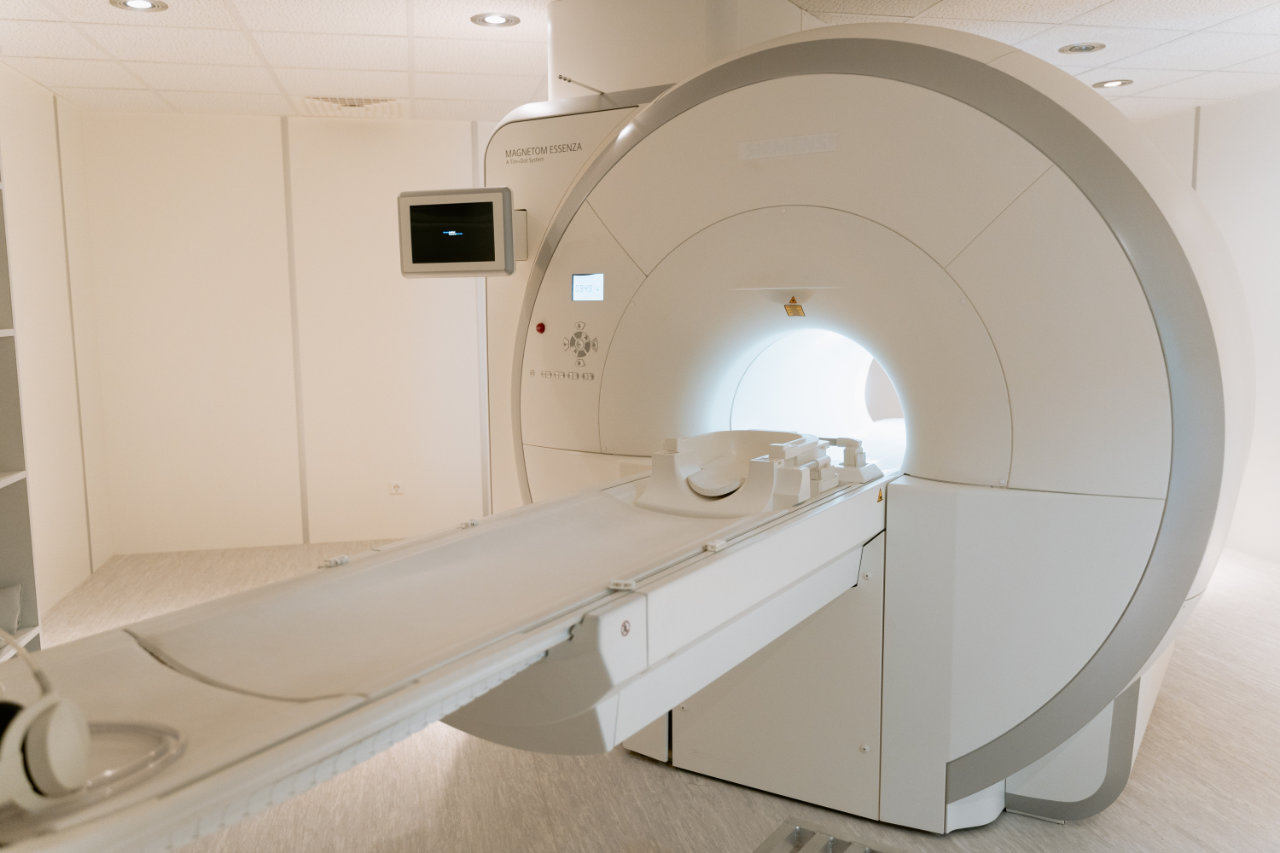
The department offers many imaging techniques to diagnose and treat a range of conditions. A patient’s experience of the department will vary according to the type of imaging technique being used, so please click on the information below to find out where to go and what to expect.
A CT scan uses x-rays and a computer to produce detailed images of the inside of your body. The department performs a wide range of CT examinations including brain, body and limb imaging. Interventional procedures such as biopsies, joint injections and drainage insertions are also performed under CT control.
MRI is an advanced imaging technique which uses a very strong magnetic field and radio waves to produce high quality pictures of your body. These images are much more detailed than ordinary X-rays, and don’t do not utilise radiation. We may offer you an MRI scan when other types of scan haven’t given the full picture.
Your experience will of an X-ray will vary according to the type of imaging technique being used, so please read your appointment letter carefully to ensure you know where you’re going and what to expect.
If you’re undergoing an X-ray of your chest, abdomen, pelvis, or spine, you will be asked to undress and wear a hospital gown. You will also need to remove any jewellery which overlies the area being scanned.
Your examination will be undertaken by a radiographer or an assistant practitioner. Radiographers are not trained to read X-rays, and so once you’ve had your scan, it will be sent to a consultant radiologist or advanced radiographer for diagnosis.
Your experience will of an X-ray will vary according to the type of imaging technique being used, so please read your appointment letter carefully to ensure you know where you’re going and what to expect.
If you’re undergoing an X-ray of your chest, abdomen, pelvis, or spine, you will be asked to undress and wear a hospital gown. You will also need to remove any jewellery which overlies the area being scanned.
Your examination will be undertaken by a radiographer or an assistant practitioner. Radiographers are not trained to read X-rays, and so once you’ve had your scan, it will be sent to a consultant radiologist or advanced radiographer for diagnosis.
A mammogram is a low-dose x-ray of the breast. This test can be used to help diagnose or monitor breast cancer. Mammograms are usually only used for women over the age of 40. In younger women, the breast tissue is more dense (has less fat). This makes it difficult to detect any changes on the mammogram. Women under the age of 35 are usually offered an ultrasound of the breast. But if you are under the age of 35 and are diagnosed with breast cancer, you may also have a mammogram. Men may also have a mammogram.
Visit Macmillan Cancer Support and Cancer Research UK to read more about mammograms.
A bone density scan uses low dose X-rays to see how dense (or strong) your bones are. You may also hear it called a DEXA scan.
As well as being quick and painless, a bone density scan is more effective than normal X-rays in identifying low bone density.
Endoscopy Unit
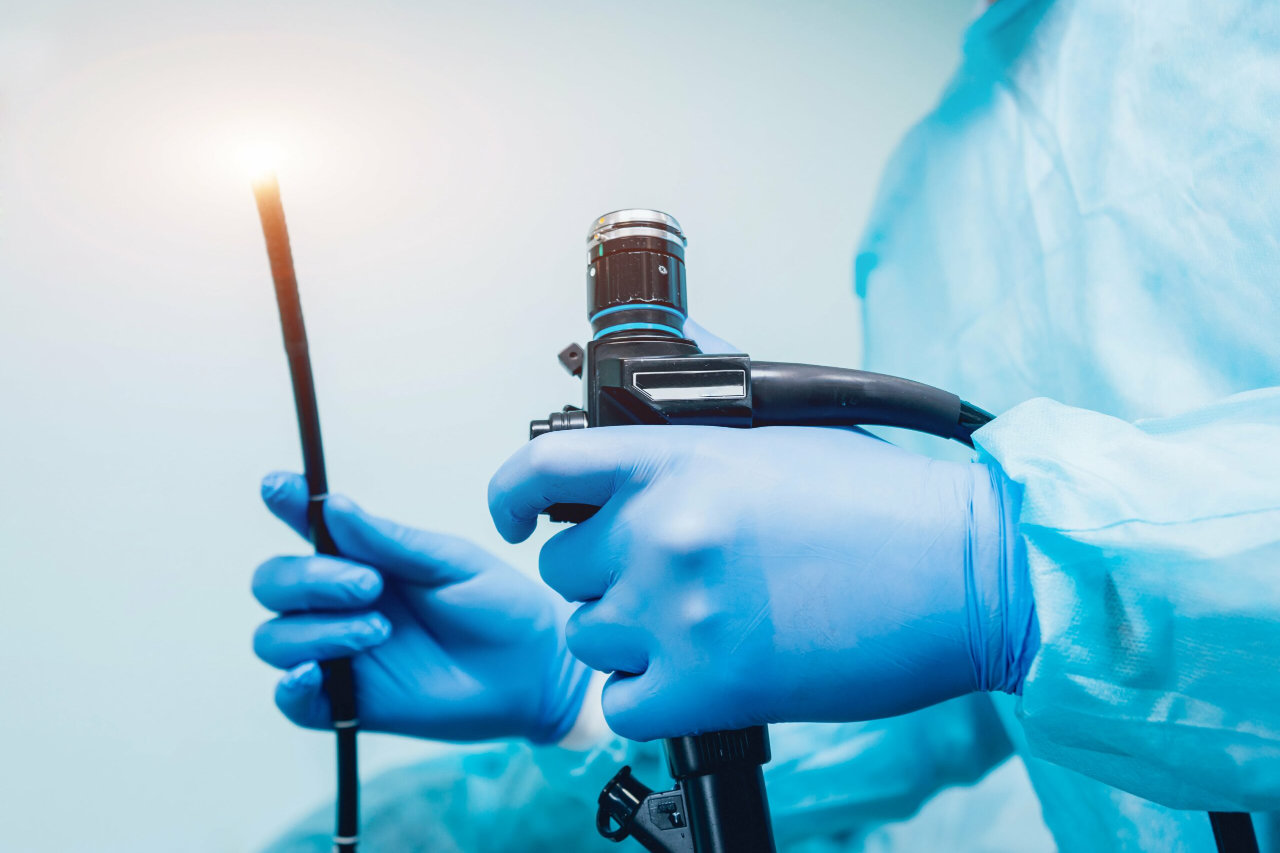
During an endoscopy, the inside of your body is visually examined via a natural orifice (mouth or anus) using a thin, flexible tube that has a video camera at one end. This is known as an endoscope. Common procedures include gastroscopy, colonoscopy, bronocscopy and ERCP.
During an gastroscopy, the inside of your body is visually examined through the mouth and into the stomach using a thin, flexible tube that has a video camera at one end.
During an colonoscopy, the inside of your body is visually examined through the anus and into the large bowel using a thin, flexible tube that has a video camera at one end.
During an bronchoscopy, the inside of your body is visually examined through the nose and into the lungs using a thin, flexible tube that has a video camera at one end.
A test to examine the tubes that drain bile from your liver and digestive juices from your pancreas, often removing stones. ERCP is short for endoscopic retrograde cholangio-pancreatography.