
Breast cancer
Cancer of the breast and surrounding breast tissue
Any concerns?
It is important to check your breasts regularly for any lumps or changes in appearance.
We investigate, treat and provide support to patients who are diagnosed with breast cancers. The service incorporates both in-patient and out-patient facilities at Harrogate District Hospital.
Breast cancer can affect both men and women. In 2017, around 54,700 women and around 390 men were diagnosed in the UK. 1 in 7 women in the UK develop breast cancer during their lifetime. It is more common in older women. Less than 1 in 100 males will develop breast cancer.
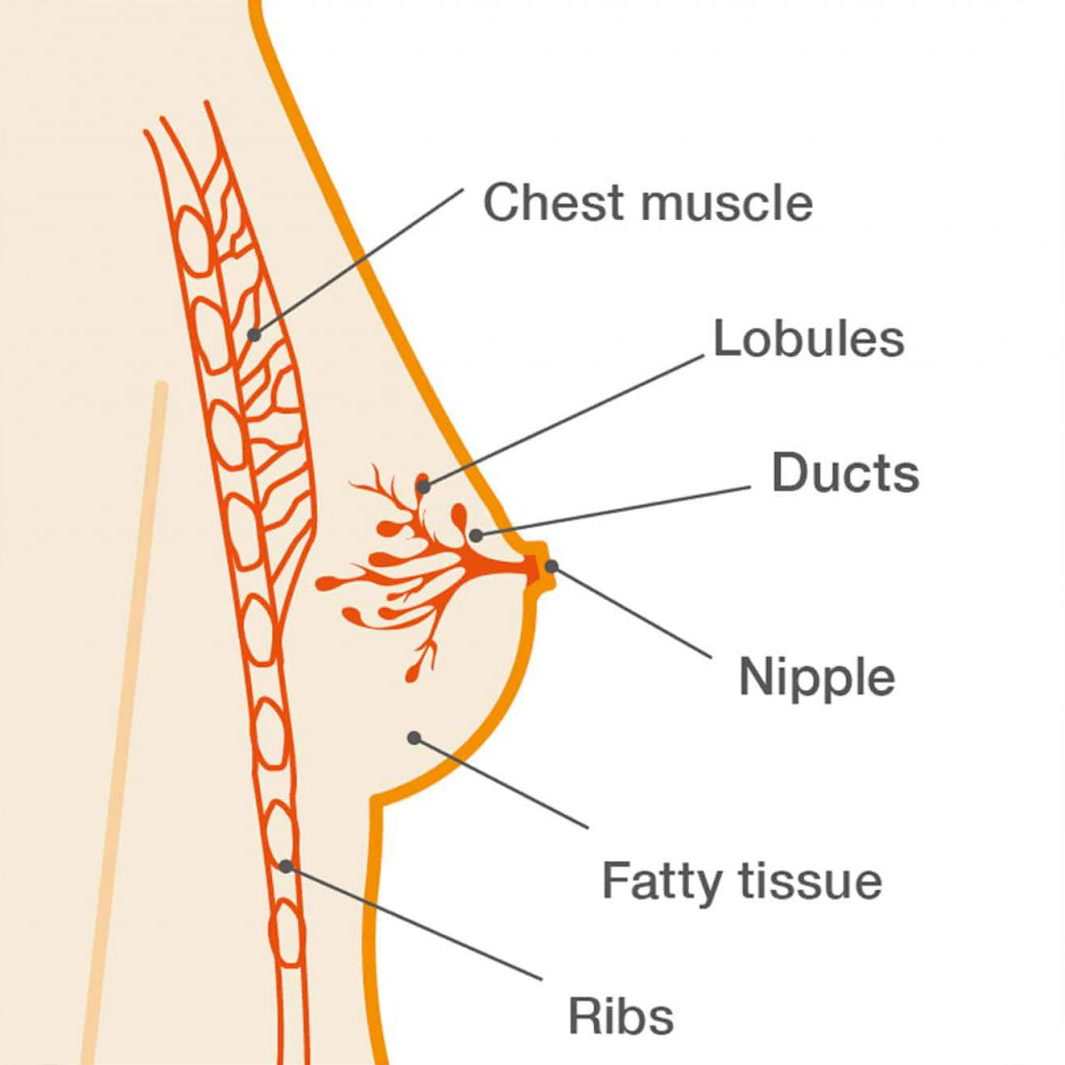

Most women diagnosed with breast cancer are over the age of 50, but it affects younger women as well. There’s a good chance of recovery if it is detected at an early stage. For this reason, it’s vital that women check their breasts regularly for any changes and always have any changes examined by a GP.
Some of the signs and symptoms of breast cancer include:
- a lump in the breast
- a change in the size or shape of the breast
- dimpling of the skin or thickening in the breast tissue
- a nipple that’s turned in (inverted)
- a rash (like eczema) on the nipple
- discharge from the nipple
- swelling or a lump in the armpit.
For more information visit Macmillan Cancer Support, Cancer Research UK and Breast Cancer Now UK.

Breast cancer is often thought of as something that only affects women, but men can get it in rare cases. It grows in the small amount of breast tissue men have behind their nipples. It usually happens in men over 60, but can very occasionally affect younger men.
Symptoms of breast cancer in males:
- a painless lump under the nipple or areaola
- a nipple turning in (inversion/inverted nipple)
- changes in the size or shape of the breast
- a rash affecting the nipple
- discharge or bleeding from the nipple
- a swelling or lump in the armpit
- an ulcer on the skin of the breast
For more information visit Macmillan Cancer Support, Cancer Research UK and Breast Cancer Now UK.
Read more in the Macmillan Cancer Support booklet: ‘Understanding breast cancer in men’.
If you are trans or non-binary, talk to your GP or practice nurse about breast screening. The NHS Breast Screening Programme only automatically invites people who are registered as female with their GP. But your GP can contact the NHS Breast Screening Programme, so you can be invited for screening appropriately.
If you are a trans man and have not had surgery to remove the breast tissue, it is a good idea to think about having breast screening. If you have had surgery but have some remaining breast tissue, you can also consider screening.
If you are a trans woman taking hormones, it is a good idea to think about having breast screening. This is because taking hormones may slightly increase the risk of breast cancer.
If you are worried about having breast screening, contact your local breast screening unit.
For more information visit Macmillan Cancer Support, Cancer Research UK and Breast Cancer Now UK.
Tests to diagnose breast cancer
The tests needed to diagnose breast cancer will be undertaken at Harrogate District NHS Foundation Trust.
A CT scan uses x-rays and a computer to produce detailed images of the inside of your body. The department performs a wide range of CT examinations including brain, body and limb imaging. Interventional procedures such as biopsies, joint injections and drainage insertions are also performed under CT control.
MRI is an advanced imaging technique which uses a very strong magnetic field and radio waves to produce high quality pictures of your body. These images are much more detailed than ordinary X-rays, and don’t do not utilise radiation. We may offer you an MRI scan when other types of scan haven’t given the full picture.
Your experience will of an X-ray will vary according to the type of imaging technique being used, so please read your appointment letter carefully to ensure you know where you’re going and what to expect.
If you’re undergoing an X-ray of your chest, abdomen, pelvis, or spine, you will be asked to undress and wear a hospital gown. You will also need to remove any jewellery which overlies the area being scanned.
Your examination will be undertaken by a radiographer or an assistant practitioner. Radiographers are not trained to read X-rays, and so once you’ve had your scan, it will be sent to a consultant radiologist or advanced radiographer for diagnosis.
During an ultrasound scan, a warmed gel is applied to the skin and high frequency sound is used to provide images of the soft tissue organs of the body. A wide range of ultrasound examinations are available including liver, kidneys, breast, muscles and joints, blood vessels and pregnancy.
A bone density scan uses low dose X-rays to see how dense (or strong) your bones are. You may also hear it called a DEXA scan.
As well as being quick and painless, a bone density scan is more effective than normal X-rays in identifying low bone density.
Treatments for breast cancer
We give chemotherapy, immunotherapy, targeted therapy and other types of treatment. We will provide you with important information on what to expect, how your treatment will be given, possible side effects and what to do if you feel unwell at any time during your course of treatment. Please let us know if you if you require this information in another language or format.
Read more about bisphosphonates for breast cancer via the Macmillan Cancer Support website.
Find out more about chemotherapy.
General information about chemotherapy can be found on the Macmillan Cancer Support website.
Read more about ‘Understanding chemotherapy‘ via the Macmillan Cancer Support booklet.
Hormone therapies work by altering the production or activity of particular hormones in the body. Hormone therapy blocks the effects of oestrogen on breast cancer cells and reduces the risk of breast cancer coming back.
Find out more about hormone therapy
Further information can also be found on the Macmillan Cancer Support website.
Immunotherapy treatments use the immune system to find and attack cancer cells.
Radiotherapy uses high-energy rays, such as x-rays, to treat cancer. It destroys cancer cells in the area where it is given.
More information about ‘Understanding radiotherapy‘ can be found on the Macmillan Cancer Support website.
Read more about ‘radiotherapy for breast cancer in men‘ via the Macmillan Cancer Support website.
Surgery is when a surgeon removes all or part of the cancer. There are different types of surgery for treating cancer. Your cancer team will decide with you which treatments are likely to work best for you.
Find out more about breast cancer surgery from the Macmillan Cancer Support website.
Targeted therapy uses drugs to find and attack cancer cells. There are many different types of targeted therapy. Each type targets something in or around the cancer cell that is helping it grow and survive.
Before starting treatment
Your cancer doctor will talk to you about your cancer, treatment options and side effects. This is important for you to understand so you can fully consent to having treatment for your cancer.
How treatment is given
Chemotherapy, immunotherapy and targeted treatments can be given by tablet, injection or via a drip called an intravenous infusion. This requires a short thin tube to be inserted into a vein either in your hand or arm. Depending on your treatment you may need additional fluids to be given before, after and or during to ensure you are fully hydrated.
The nurse looking after you will also give you anti-sickness medication and sometimes a steroid too. These may be given as a tablet, injection or an infusion.
Cancer treatments are usually given over several months this is called a course of treatment. Each session is called a cycle and are often spaced 3 weeks apart although we do increasingly give weekly chemotherapy treatments too. During the course of your treatment you may have additional scans arranged to monitor your progress.
Find out more about visiting and appointments.
Meet our Multidisciplinary Team
The breast cancer service is made up of a Multidisciplinary Team (MDT) who work together to diagnose breast cancer and to identify the best course of treatment for each patient.
Find out more about the Breast Cancer Multidisciplinary Team here.




Your health and wellbeing
We know that living with cancer has repercussions beyond treating the cancer itself. Your mental health, your financial situation, the disruption to your family life are all important issues. The help we provide extends far beyond medical treatment. Check our range of support services and get the help you need.


